
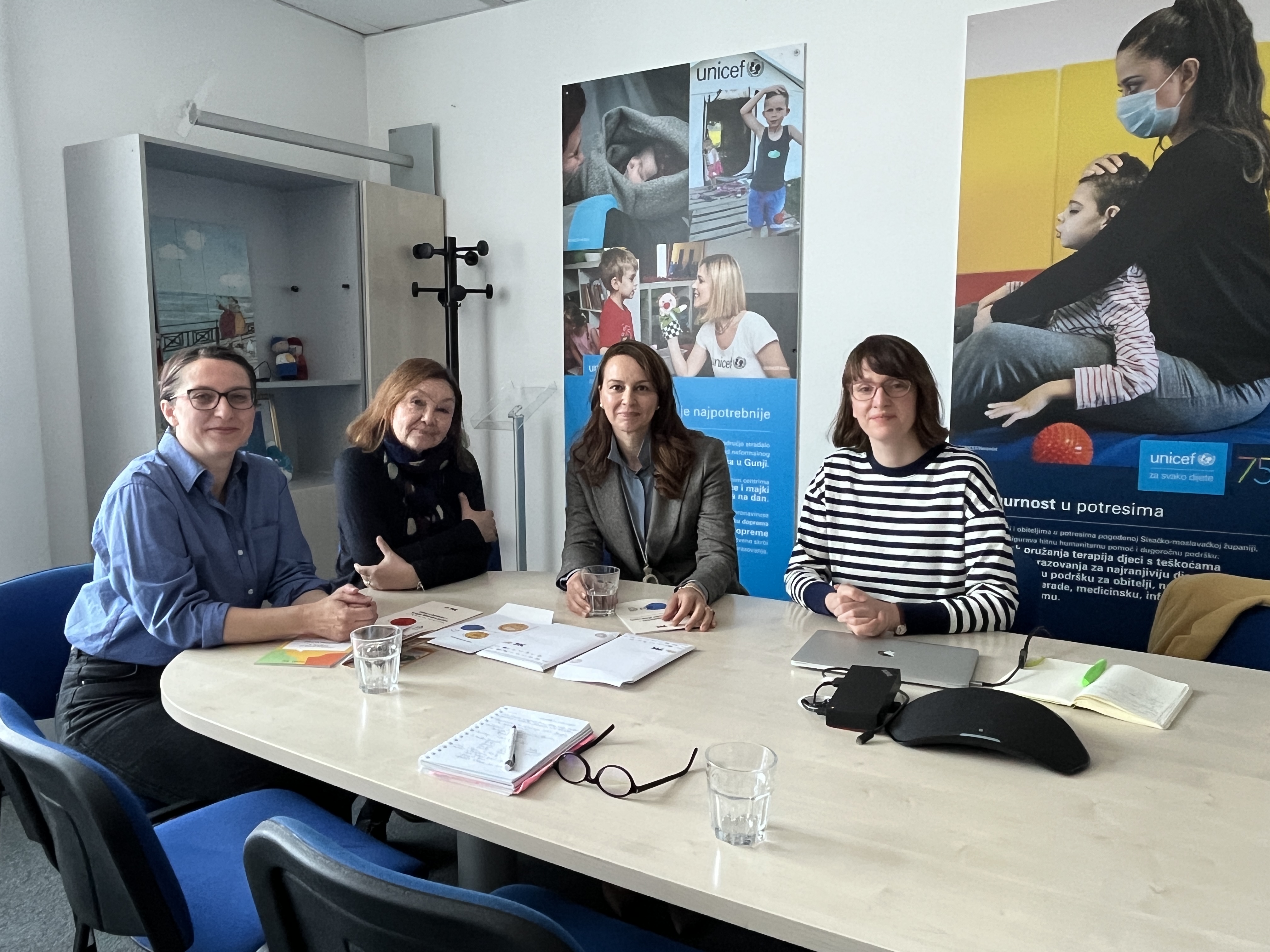
We Presented the “Film in Hospital” Project at the UNICEF Office in Croatia
On April 10, we visited the UNICEF office in Croatia to present our “Film in Hospital” project, as well as the broader work of the Children Meet Art Association in the fields of film education and cultural participation for children in sensitive life circumstances.
During the meeting, we discussed the importance of ensuring access to culture and art for children and young people, even when facing hospitalization, long-term treatment, or other challenging circumstances that temporarily distance them from everyday life and standard cultural content. We presented how the “Film in Hospital” project has been building a space of support, participation, and connection for years through carefully selected European films, accompanying educational materials, and meetings and workshops within the hospital environment.
Our booklet, “What I Want in the Hospital: 10 Guidelines for Good Care,” published late last year, drew particular interest. The publication is based on over ten years of experience working with children in vulnerable situations—especially in the context of hospitalization—and gathers practical knowledge, observations, and recommendations developed through direct work in hospitals, collaboration with educational and healthcare professionals, and the development of programs that enable children’s right to a cultural life even in moments of vulnerability.
At the meeting, we emphasized that our approach stems from the belief that children do not cease to be participants in cultural life or holders of the right to artistic and cultural experiences during medical treatment. This is precisely why the “Film in Hospital” project strives to connect film art, education, and child well-being into a model that contributes to the humanization of the hospital environment and strengthens a sense of inclusion, continuity, and dignity.
We are pleased to have had the opportunity to present our work and exchange experiences with the UNICEF office in Croatia, opening up space for further dialogue on the importance of culture, participation, and support for children in sensitive life situations.


